Thursday, 5 March 2026

How to Build an Emergency Fund in 2025

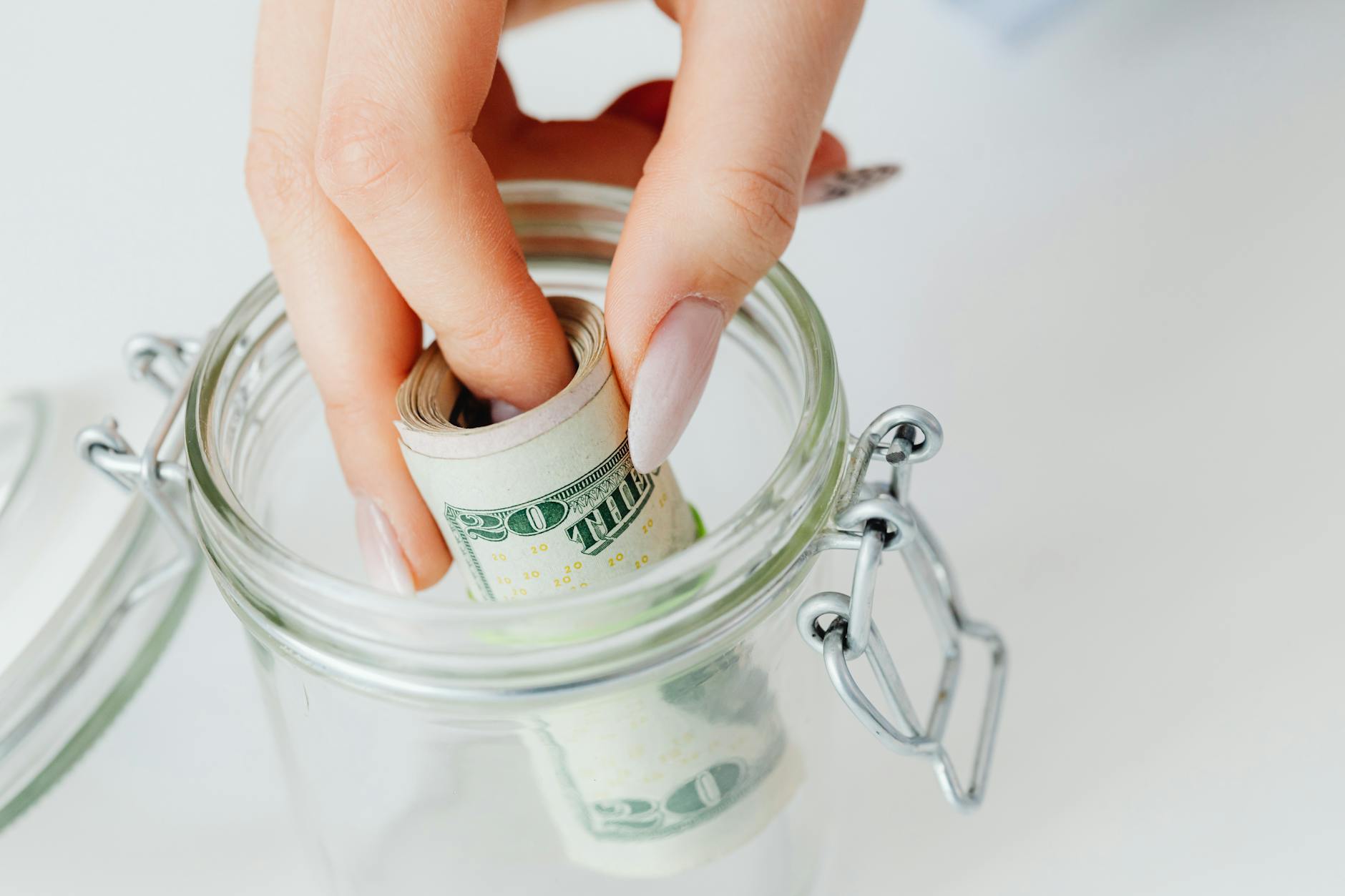
A close-up of a hand placing rolled dollars into a glass jar, symbolizing savings.

Photo by www.kaboompics.com on Pexels

How to Build an Emergency Fund in 2025: Your Step-by-Step Guide to Financial Security

Imagine facing a sudden car breakdown, an unexpected medical bill, or even a temporary job loss without dipping into high-interest debt. In 2025, with economic uncertainties like fluctuating interest rates and rising living costs, building an emergency fund is more crucial than ever for beginner and intermediate personal finance enthusiasts. This comprehensive guide provides actionable strategies, backed by expert advice, to help you create a financial safety net that brings peace of mind.[1][2]

An emergency fund acts as your first line of defense against life's surprises, covering 3-6 months of essential living expenses without relying on credit cards or loans. Whether you're starting from zero or rebuilding after setbacks, these proven steps will get you there systematically.[3][8]

Financial Disclaimer: This content is for informational purposes only and is not intended as professional financial, investment, or legal advice. Consult a qualified financial advisor for personalized recommendations tailored to your situation.

Why You Need an Emergency Fund in 2025 – And How Much to Save

Unexpected events like car repairs, medical emergencies, or income disruptions can derail your budget quickly. Financial experts emphasize that an emergency fund prevents reliance on debt, which often carries high interest rates.[3] In 2025, with potential Fed rate adjustments, maintaining liquidity while earning competitive yields is key.[4]

To determine your target, calculate your essential monthly expenses: rent or mortgage, utilities, groceries, transportation, insurance, and minimum debt payments. Review the past 12 months of bank and credit card statements, add essentials, divide by 12 for your average, then multiply by 3-6.[2][8]

  • Singles with minimal responsibilities: Aim for $2,000-$3,000 or 3 months' expenses.[5]
  • Families or homeowners: Target 6 months to cover dependents, pets, or variable costs.[1][5]
  • Self-employed: Build two funds – one for income fluctuations (2-3 months of low-earning buffer) and another for true emergencies.[5]

For example, if your monthly essentials total $4,000, shoot for $12,000-$24,000. Use free online calculators from sources like NerdWallet for precision.[2] This personalized goal keeps motivation high and realistic.[6]

Step-by-Step Guide: How to Build Your Emergency Fund from Scratch

Building an emergency fund doesn't require drastic changes – consistency wins. Follow this numbered, actionable plan tailored for 2025.[1][3]

  1. Assess and Set Your Goal (Week 1): Track expenses for one month using apps or spreadsheets. Categorize fixed (e.g., rent) vs. variable (e.g., dining out). Set a specific, achievable target like 3 months' expenses.[1][8]
  2. Open a Dedicated Account (Week 1-2): Choose a high-yield savings account (HYSA) offering 4-5% APY, FDIC-insured up to $250,000. Link it to your checking but keep it separate to avoid temptation. Alternatives include money market accounts for liquidity.[1][3][4][5]
  3. Automate Small, Consistent Contributions (Ongoing): Transfer $20-$100 post-paycheck automatically – if never in your checking, you won't miss it. For a $3,700 monthly budget, allocate 19% ($700) to savings.[2][5][7]
  4. Track and Celebrate Progress (Monthly): Use banking apps to monitor growth. Hit $1,000? Reward yourself modestly without spending the fund.[1]
  5. Replenish After Use (As Needed): Only dip in for true emergencies like job loss or major repairs. Prioritize rebuilding immediately.[3]

This process can fill a $10,000 fund in 12-24 months with $400 monthly deposits, compounding at current HYSA rates.[4]

Practical Tips to Accelerate Your Savings in 2025

Maximize progress with these beginner-friendly, intermediate-level strategies. Focus on income boosts and expense cuts without lifestyle sacrifice.[1][5]

Cut Unnecessary Expenses Without Pain

  • Review subscriptions: Cancel unused streaming or gym memberships – save $50+/month.
  • Meal prep: Reduce dining out by 50%, freeing $200/month.
  • Energy audit: Lower utilities with LED bulbs and smart thermostats – average $100/year savings.

Boost Income Streams

  • Side hustles: Freelance on platforms like Upwork, drive for rideshares, or tutor – aim for $500 extra/month.[1]
  • Declutter and sell: Use apps like Facebook Marketplace for unused clothes, electronics – one garage sale nets $300-$1,000.[1]
  • Negotiate bills: Call providers for discounts on cable, insurance – save 10-20% annually.

Leverage 2025 Opportunities

With HSAs for high-deductible plans, contribute pre-tax for medical emergencies (triple tax advantages).[4] For self-employed, high-earning months fund your income buffer first.[5] Quarterly review allocations amid rate changes.[4]

Pro tip: The "pay yourself first" rule – treat savings like a non-negotiable bill.[2]

Best Places to Park Your Emergency Fund in 2025

Your fund needs three traits: safety (no market risk), liquidity (access in 1-5 days), and yield (beating inflation). Avoid stocks or bonds.[3][8]

Option Pros Cons Best For 2025 Yield Estimate
High-Yield Savings Account (HYSA) FDIC-insured, easy access, 4-5% APY Rates may fluctuate Most people 4-5%[4][5]
Money Market Account Liquid, check-writing, competitive rates Minimum balances Intermediate savers 4%+[3]
Treasury I Bonds (Tier 2/3) Gov't backed, inflation-protected 1-year lockup Longer-term reserve Variable + inflation[4]
CD Ladder Higher fixed rates, staggered access Penalties for early withdrawal Strategic reserves 4-5%[4]

Start with HYSA for core funds; ladder CDs for excess. Compare via bank sites – online banks often lead.[4] Keep at a different bank from checking to curb impulse transfers.[5]

For advanced users: Allocate 50% HYSA, 30% money market, 20% I Bonds if you can wait 12 months.[4]

Common Mistakes to Avoid and Long-Term Maintenance

Steer clear of pitfalls that sabotage progress:

  • Mingling funds: Never use it for vacations – designate strictly for emergencies.[3]
  • Ignoring inflation: In 2025, seek yields above 3-4% to preserve purchasing power.[4]
  • One-size-fits-all goals: Customize based on job stability – gig workers need more.[5]
  • Forgetting reviews: Reassess quarterly; increase as income rises.[1][4]

Maintain by automating increases (e.g., 1% of raises) and stress-testing: Could you survive 3 months unemployed?[8]

Ready to Secure Your Financial Future? Start Today!

Building an emergency fund in 2025 is achievable with discipline and smart choices – even $20 weekly compounds into thousands. You've got the roadmap: assess needs, automate savings, choose the right account, and stay consistent. Take action now: Calculate your monthly expenses tonight, open a HYSA tomorrow, and set your first auto-transfer this week. Your future self will thank you for this foundation of stability.

Share your progress in the comments – what's your emergency fund goal? Subscribe for more personal finance tips, and download our free budgeting template to kickstart your journey!

(Word count: 1,428)

Financial Disclaimer: This content is for informational purposes only and is not intended as professional financial, investment, or legal advice. Consult a qualified financial advisor for personalized recommendations tailored to your situation.

Disclaimer: For educational purposes only. Not financial advice.
About This Blog

Practical personal finance tips for everyday people.

Last updated: March 5, 2026

Monday, 16 February 2026

YouTube Kids vs. WhitelistVideo: Why "Safe" Isn't Enough in 2026


Introduction:
Most parents think that installing "YouTube Kids" is the final step to digital safety. But if you’ve noticed your child spiraling into "brain-rot" content or "strange" AI-generated animations, you aren't alone. In 2026, the YouTube algorithm is designed for one thing: Engagement.

Today, we are comparing the official YouTube Kids app against the rising "Zero-Trust" alternative: WhitelistVideo.

1. The Core Difference: Blacklist vs. Whitelist

  • YouTube Kids (Blacklist/Filter Model): This app starts with millions of videos and tries to "filter out" the bad ones using AI. The problem? Thousands of inappropriate videos slip through the cracks every day.

  • WhitelistVideo (Zero-Trust Model): This app starts with zero videos. It blocks everything by default. You, the parent, manually add the specific channels (like National Geographic or Khan Academy) that your child is allowed to watch.

Developer's Note: In cybersecurity, we never trust a firewall that tries to "guess" what is bad. We only allow what we know is good. WhitelistVideo brings this enterprise-level security to your home.


FeatureYouTube KidsWhitelistVideo
ApproachFilters out "bad" contentAllows only "good" content
AlgorithmEncourages "Rabbit Holes"No algorithm (Safe)
ShortsBuilt-in (Hard to block)1-Click Block toggle
SearchFiltered but unpredictableSearch only within approved channels
Age GroupToddlers (3-8)Best for School Kids & Teens (4-18)

3. Why YouTube Kids is Failing Parents in 2026

Even with the best AI, YouTube Kids has three major flaws:

  1. The "Addiction" Loop: The app is still built to keep kids watching for hours using "Recommended" videos.

  2. The "ElsaGate" Problem: Creepy or weird content often disguised as kid-friendly animation still bypasses filters.

  3. The "Growth" Gap: Once a child turns 9 or 10, they find YouTube Kids "childish" and want the real YouTube. This is where they often fall into the most danger.


4. How WhitelistVideo Solves This.

WhitelistVideo allows your child to use the real YouTube interface (which they love) but inside a "walled garden" that you control.

  • Request System: If your kid finds a new channel, they hit a button. You get a notification on your phone in Salem (or wherever you are), review the channel, and click "Approve" in 5 seconds.

  • AI Shield: Even on whitelisted channels, the app can use AI to scan video titles for specific keywords you want to avoid.

  • Focus on Learning: You can set a whitelist that only includes educational channels during school hours.

5. Final Verdict: Which should you choose?

  • Choose WhitelistVideo if you want to give your child (ages 4-18) the freedom to learn from YouTube without worrying about them seeing adult content, violent "Shorts," or addictive junk.

    Ready to give your child a safer YouTube?

    If you are ready to move beyond the hit-or-miss filtering of YouTube Kids, you can start setting up your "Zero-Trust" environment today. It takes less than 5 minutes to set up, and the peace of mind is worth every second.

Monday, 10 February 2025

How to Become a Successful Man: A Comprehensive Guide

 Success is not just about wealth or status—it’s about personal growth, resilience, and continuous improvement. Becoming a successful man requires strategic planning, discipline, and strong relationships. In this guide, we will explore the key habits and traits that contribute to long-term success.

1. Cultivate a Growth Mindset and Set Clear Goals


Success begins with the right mindset. A growth mindset allows you to embrace challenges, learn from failures, and continuously improve yourself. Set SMART (Specific, Measurable, Achievable, Relevant, Time-bound) goals that provide clear direction. Whether in business, personal development, or relationships, having a defined vision will keep you motivated.


2. Develop Discipline, Consistency, and Strong Work Ethics

Success doesn’t come overnight—it requires daily efforts. Highly successful people follow disciplined routines, manage their time effectively, and prioritize their tasks. Avoid distractions and cultivate productive habits such as waking up early, exercising, and maintaining focus. Consistency in efforts, no matter how small, compounds into great achievements.


3. Build Strong Networks and Learn from Mentors

Surrounding yourself with successful and like-minded people significantly impacts your growth. Mentors and professional networks provide guidance, insights, and opportunities. Engage with people who inspire you, attend industry events, and learn from their experiences. Having the right connections can open doors to success much faster than working alone.


------------------------------------***********-----------------------------------------

"This Content Sponsored by Buymote Shopping app

BuyMote E-Shopping Application is One of the Online Shopping App

Now Available on Play Store & App Store (Buymote E-Shopping)

Click Below Link and Install Application: https://buymote.shop/links/0f5993744a9213079a6b53e8

Sponsor Content: #buymote #buymoteeshopping #buymoteonline #buymoteshopping #buymoteapplication"


Wednesday, 5 February 2025

A Beginner’s Guide to Forex Trading: How to Profit from the Global Currency Market

What is Forex Trading and How Does It Work?

Forex trading, also known as foreign exchange trading, involves buying and selling currency pairs to make a profit. It is the world’s largest financial market, with trillions of dollars traded daily. Unlike the stock market, forex operates 24 hours a day, allowing traders to capitalize on global economic events and market fluctuations. Traders speculate on currency price movements by analyzing market trends, news, and technical indicators.


Essential Forex Trading Strategies for Beginners

Successful forex trading requires strategic planning and risk management. Common strategies include:

  • Scalping: Making multiple small trades within short time frames for quick profits.
  • Day Trading: Entering and exiting trades within a single trading day to avoid overnight risks.
  • Swing Trading: Holding trades for several days or weeks based on market trends.
  • Position Trading: A long-term strategy where traders hold positions for months, focusing on fundamental analysis.
    Understanding these strategies helps traders make informed decisions and minimize risks.


Forex prices are affected by various economic, political, and financial factors, including:

  • Interest Rates: Higher interest rates attract foreign investment, strengthening the currency.
  • Economic Data: Reports on employment, GDP, and inflation impact currency values.
  • Political Events: Elections, trade agreements, and geopolitical tensions can cause market volatility.
  • Market Sentiment: Trader emotions and speculation also influence price movements.
    Monitoring these factors helps traders anticipate price fluctuations and make better trading decisions.

Risk Management and Tips for Profitable Forex Trading

Forex trading involves risks, but with the right strategies, traders can protect their investments:

  • Use stop-loss orders to limit potential losses.
  • Avoid overleveraging, which can lead to significant losses.
  • Keep a trading journal to track performance and improve strategies.
  • Stay updated with global financial news to make informed trading decisions.
    By implementing risk management techniques, traders can enhance their profitability while minimizing losses.


------------------------------------**************-------------------------------------

"This Content Sponsored by Buymote Shopping app

BuyMote E-Shopping Application is One of the Online Shopping App

Now Available on Play Store & App Store (Buymote E-Shopping)

Click Below Link and Install Application: https://buymote.shop/links/0f5993744a9213079a6b53e8

Sponsor Content: #buymote #buymoteeshopping #buymoteonline #buymoteshopping #buymoteapplication


Wednesday, 22 January 2025

How to Build Asset-Based Income: A Guide to Financial Freedom

 Asset-based income is the revenue generated from assets you own rather than from active work. Unlike a regular paycheck, asset-based income provides financial stability and long-term wealth creation. Examples include real estate rental income, stock dividends, business ownership, and intellectual property earnings.


1. Understanding Asset-Based Income: The Key to Wealth

                 Asset-based income is money earned from assets you own rather than from active work. Unlike a traditional salary, this income continues to flow even if you stop working. Common examples include rental properties, stock dividends, business investments, and digital assets. The key to building this type of income is acquiring assets that appreciate in value while generating regular returns.


2. Real Estate Investments: A Powerful Source of Passive Income

                Real estate is one of the most effective ways to generate asset-based income. Buying rental properties allows you to earn monthly rent while the property value increases over time. You can also invest in Real Estate Investment Trusts (REITs), which offer returns without the need to manage properties. The key is choosing properties in high-demand areas and maintaining them well to attract long-term tenants.


3. Investing in Stocks and Dividend Funds for Steady Returns

                Stocks and dividend-paying funds allow you to earn money through capital appreciation and periodic payouts. Companies with strong financial performance often distribute profits as dividends to shareholders. By reinvesting these dividends and holding high-growth stocks, you can build a consistent income stream over time. Exchange-Traded Funds (ETFs) focused on dividends are also a great way to diversify your investments while earning passive income.


4. Creating Digital Products and Online Businesses for Residual Income

In the digital era, selling eBooks, online courses, or digital art can generate long-term passive income. Once created, these products can be sold repeatedly with minimal effort. Popular platforms like Amazon Kindle, Udemy, and Etsy make it easy to reach global audiences. Additionally, launching a website or YouTube channel with monetized content can provide continuous earnings through ads and subscriptions.


---------------------------------------------************------------------------------------------------------------

"This Content Sponsored by Buymote Shopping app

BuyMote E-Shopping Application is One of the Online Shopping App

Now Available on Play Store & App Store (Buymote E-Shopping)

Click Below Link and Install Application: https://buymote.shop/links/0f5993744a9213079a6b53e8

Sponsor Content: #buymote #buymoteeshopping #buymoteonline #buymoteshopping #buymoteapplication"


How to Build an Emergency Fund in 2025

Photo by www.kaboompics.com on Pexels How to Build an Emergency Fund in 2025: Your Step-by-Step Guide to Financial Security Imagine facing ...